Medical 3D Printing: The Robotic Machine Pri and the Future of Organ Transplantation
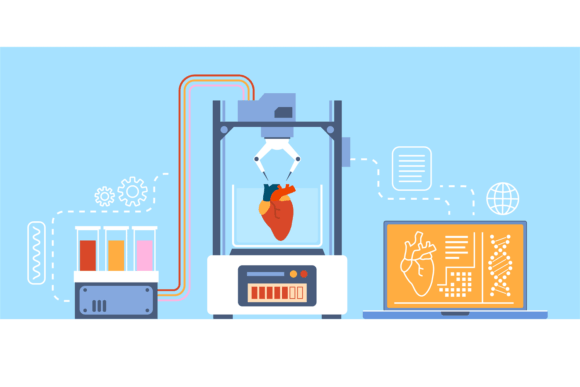
The field of medical technology has witnessed a remarkable transformation with the advent of Medical 3D Printing. At the forefront of this innovation is the Robotic Machine Pri, a cutting-edge system capable of printing human organs, including hearts. This advancement represents a significant leap in futuristic healthcare, offering new possibilities for organ transplantation and personalized medicine.
What is Medical 3D Printing?
Medical 3D Printing refers to the use of additive manufacturing techniques to create complex anatomical structures, implants, prosthetics, and even functional organs. Unlike traditional manufacturing methods, 3D printing allows for precise customization and intricate design, making it an invaluable tool in modern medicine.
The Robotic Machine Pri takes this concept further by integrating robotics with bioprinting technologies. This hybrid approach enables the layer-by-layer construction of biological tissues using bioinks composed of living cells, growth factors, and biomaterials. The result is a highly accurate and viable alternative to donor organs.
The Role of Robotic Machine Pri in Organ Transplantation
The ability of the Robotic Machine Pri to print human hearts and other internal organs marks a pivotal moment in medical science. Traditional organ transplantation is often limited by the availability of suitable donors and the risk of rejection. With Medical 3D Printing, the potential for creating patient-specific organs eliminates these challenges.
For instance, researchers have successfully used the Robotic Machine Pri to print heart valves and vascular structures that closely mimic natural tissue. These printed components can be tailored to match the exact dimensions and biological needs of individual patients, significantly improving surgical outcomes and recovery times.
Key Characteristics of Medical 3D Printing with Robotic Machine Pri
- Customization: Each printed organ can be designed to fit the unique anatomical requirements of a patient, reducing the risk of complications.
- Biocompatibility: The materials used in the Robotic Machine Pri are carefully selected to ensure compatibility with the human body, minimizing the chance of rejection.
- Precision: Advanced robotic systems enable micrometer-level accuracy, essential for replicating complex structures like the human heart.
- Speed: Compared to traditional methods, the Robotic Machine Pri can produce organs in a fraction of the time, which is crucial in emergency situations.
Practical Applications and Real-World Use
In real-world applications, Medical 3D Printing with the Robotic Machine Pri is already being explored in various clinical settings. Hospitals and research institutions are experimenting with printing skin grafts, bone structures, and even entire livers for transplant. These developments highlight the versatility and practical value of the technology.
One notable example involves a team of scientists who used the Robotic Machine Pri to create a fully functional miniature heart. This breakthrough not only demonstrates the feasibility of printing complex organs but also opens the door to future advancements in regenerative medicine.
Quality, Usability, and Long-Term Value
The quality of organs produced by the Robotic Machine Pri is a critical factor in determining its effectiveness. Early trials have shown promising results, with printed tissues exhibiting structural integrity and cellular viability. However, long-term studies are still needed to assess how well these organs function over time within the human body.
Usability is another key consideration. While the technology is still in its early stages, it requires specialized expertise and infrastructure to operate effectively. As such, it may initially be more accessible to large medical institutions rather than smaller clinics or private practices.
The long-term value of Medical 3D Printing lies in its potential to revolutionize organ transplantation and reduce dependency on donor organs. It could also lead to more personalized treatment options, improving patient outcomes and reducing healthcare costs in the long run.
Who Benefits Most from Medical 3D Printing?
The primary beneficiaries of Medical 3D Printing with the Robotic Machine Pri include patients in need of organ transplants, medical professionals seeking innovative solutions, and researchers exploring new frontiers in biotechnology.
Patients suffering from chronic conditions or those awaiting organ transplants stand to gain the most from this technology. By eliminating the need for donor organs, the Robotic Machine Pri offers a safer and more reliable alternative, particularly for individuals with rare blood types or those who cannot find a suitable match.
Medical professionals and researchers also benefit from the precision and flexibility offered by Medical 3D Printing. The ability to create customized implants and prosthetics enhances surgical procedures and improves patient care. Additionally, the technology provides a platform for conducting advanced research on tissue engineering and regenerative medicine.
Limitations and Considerations
Despite its many advantages, Medical 3D Printing with the Robotic Machine Pri is not without limitations. One major challenge is the complexity of printing fully functional organs that can integrate seamlessly with the human body. Current technologies are still in the experimental phase, and much work remains to be done before they become widely available for clinical use.
Another consideration is the cost and accessibility of the technology. The high initial investment required for acquiring and maintaining a Robotic Machine Pri may limit its adoption to well-funded institutions. As the technology evolves, however, it is expected that costs will decrease, making it more accessible to a broader range of healthcare providers.
The Future of Healthcare with Medical 3D Printing
The integration of Medical 3D Printing and robotic systems like the Robotic Machine Pri heralds a new era in healthcare. As the technology continues to advance, we can expect to see more sophisticated applications, including the printing of complete organs for transplantation and the development of personalized treatments tailored to individual genetic profiles.
Looking ahead, the combination of robotics, artificial intelligence, and bioprinting will likely drive further innovations in medical science. These advancements will not only improve patient outcomes but also redefine the standards of care in hospitals and clinics around the world.
While the journey toward fully functional 3D-printed organs is still ongoing, the progress made so far underscores the transformative potential of Medical 3D Printing. For those interested in the future of healthcare, the Robotic Machine Pri represents a compelling glimpse into what is possible when technology and biology converge.